
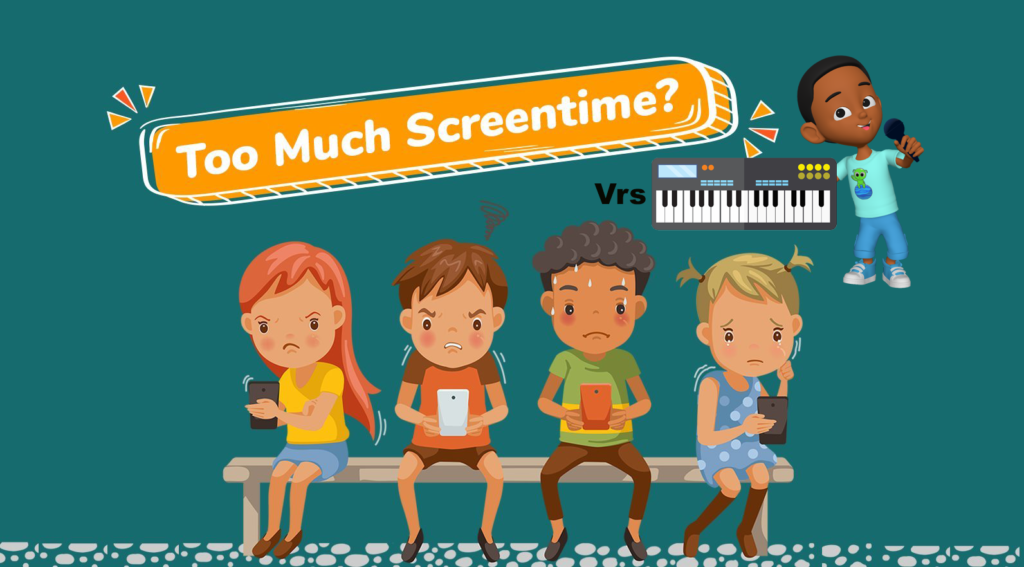
In today’s digital world, interestingly, screens are everywhere. From smart phones and tablets to TVs and gaming consoles, children are growing up surrounded by digital devices. While technology has its benefits, many parents are increasingly worried about how much screen time is too much and what it may be replacing in their children’s lives.
One major concern is this:
Is excessive screen time taking away from meaningful learning experiences like music education?
This article explores screen time vs music learning for kids. Moreover, the goal is helping parents understand the impact of both, and the risks of imbalance. Furthermore, we’ll explore how music learning can play a powerful role in raising healthier, smarter, and emotionally balanced children.
Understanding Screen Time: What Parents Are Worried About
Screen time refers to the amount of time children spend on digital devices such as TVs, phones, tablets, computers, and gaming consoles.
Common parental concerns include:
- Reduced attention span
- Poor academic focus
- Sleep disruption
- Addiction to games or social media
- Limited physical and creative activity
- Reduced social interaction
According to many child development experts, screens are not inherently bad, but unregulated and excessive use can negatively affect a child’s cognitive, emotional, and social growth.
Parents often ask:
How much screen time is healthy?
Is educational content enough justification?
What skills is my child missing out on?
These questions lead us to an often overlooked alternative: music learning.
What Music Learning Offers That Screens Often Don’t
Music learning goes far beyond entertainment. When a child learns music – whether singing, playing an instrument, or understanding rhythm – it engages the brain, body, and emotions all at once.
Key areas music learning develops:
- Brain coordination
- Emotional intelligence
- Discipline and patience
- Creativity and imagination
- Listening and communication skills
- Confidence and self-expression
Interestingly, unlike passive screen consumption, music learning is active. The child participates, thinks, feels, and creates. Let’s consider brain development: Screens vs Music.
Screen Time and the Brain
While educational apps and videos can be helpful, prolonged screen exposure often leads to:
- Shortened attention span
- Reduced deep thinking
- Overstimulation
- Dependency on instant gratification
Children may struggle to focus on tasks that require patience, such as reading, writing, or problem-solving.
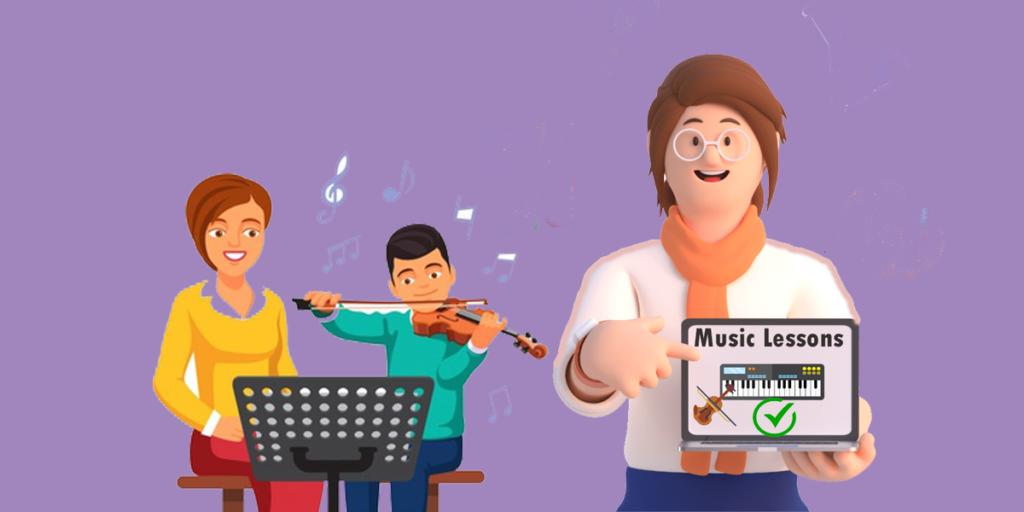
Music Learning and the Brain
Music learning activates both the left and right hemispheres of the brain simultaneously. Moreover, research consistently shows that children who learn music tend to:
- Improve memory and concentration
- Develop stronger language skills
- Perform better in mathematics
- Process information faster
Besides, music strengthens neural connections, helping children become better learners overall, not just better musicians.
Emotional Health: A Major Concern for Parents
Developing emotional intelligence is a very important aspect of a child’s life. Many parents today worry about:
- Anxiety in children
- Emotional outbursts
- Poor emotional expression
- Low self-esteem
The Emotional Impact of Excessive Screen Time
Now, let’s consider what too much screen exposure can cause in a child:
- Reduce real-life emotional interaction
- Increase irritability
- Limit emotional expression
- Create social withdrawal
Music as Emotional Therapy for Kids
Music provides children with a safe emotional outlet. Moreover, through music, children learn to:
- Express feelings without words
- Manage stress and frustration
- Build emotional resilience
- Experience joy and accomplishment
Indeed, a child who plays music often finds comfort, confidence, and emotional balance. Check out 7 benefits of music in early child development. However, screens rarely provide discipline, structure, and patience.
Certainly, one thing many parents desire is to help their children develop discipline and responsibility. On the contrary, screens promote convenience and ease. It promotes instant rewards, automatic entertainment and minimal effort. In particular, this can unintentionally discourage patience and persistence. However, music builds lifelong skills such as:
- Practice routines
- Goal setting
- Delayed gratification
- Consistency
- Focus
Interestingly, when a child practices an instrument or rehearses a song, they learn that progress comes through effort, a lesson that benefits them for life.
Excessive screen use may reduce:
- Face-to-face communication
- Teamwork skills
- Empathy
- Listening ability
Even when children interact online, it often lacks emotional depth. However, music encourages social interaction. It also encourages group participation. Music builds social skills such as listening to others, cooperation, confidence in public settings. Besides, children who learn music often become better communicators and more socially confident.
Academic Performance: What Parents Want to See
Parents care deeply about academic success. While screens can support learning, too much screen time is often linked to:
- Reduced study focus
- Poor homework habits
- Lower reading engagement
Music and Academic Excellence
Children involved in music education frequently show:
- Better reading and language skills
- Improved math performance
- Stronger memory retention
- Higher overall academic motivation
Music trains the brain to process patterns, timing, and structure. Indeed, these are skills that translate directly into academic success.
Can Screen Time and Music Coexist?
The answer is yes, however, balance is the key. Screens are part of modern life and cannot be eliminated entirely. The problem arises when screens replace active learning, creativity, and human interaction.
Healthy balance tips for parents:
- Set daily screen time limits
- Prioritize offline learning activities
- Introduce structured music lessons
- Encourage active participation over passive viewing
- Use screens as tools, not babysitters
Practical Steps Parents Can Take Today
Today, many parents are actively looking for simple, realistic actions:
- Start Music Early
Children can begin music exposure as early as toddler age through singing, rhythm games, and simple instruments.
- Choose Age-Appropriate Music Learning
Focus on fun, exploration, and creativity rather than pressure.
- Create a Routine
Replace some screen time with daily music practice. Singing together and listening to quality music.
- Be Involved
Children are more motivated when parents show interest. It’s also important to listen, encourage, and celebrate their progress.
- Use Technology Wisely
If screens are used, let them support music learning, not replace it (e.g., guided lessons instead of random videos).
The Long Term Impact Parents Should Consider
When parents choose music learning over excessive screen time, they are investing in:
- Better mental health
- Stronger academic skills
- Emotional intelligence
- Creativity and confidence
- Lifelong learning habits
Music does not just teach children how to play instruments, it teaches them how to think, feel, and grow.
Final Thoughts: Choosing What Truly Matters
Screen time will always be part of a child’s world. However, music learning offers something screens cannot replace: human connection, emotional expression, discipline, and creativity.
Music is ideal for parents who truly want to give their children a strong foundation academically, emotionally, and socially. Music education is not a luxury; it is a powerful developmental tool.
The question is no longer “Should my child learn music?” It is “What opportunities might my child miss if they don’t?”
Do you want to start Your Child’s Musical Development?
You Might Like:
No related posts.